
Why move to St. Louis?
Short version: your money goes further, there's more to do than you expect, and the city is glad to have you. Here's the longer version.
Cost of living, at a glance
Housing is where St. Louis really wins. Here's how the metro stacks up on an index where 100 is the U.S. average.
| Category | St. Louis | U.S. average |
|---|---|---|
| Housing | 100 | |
| Transportation | 100 | |
| Miscellaneous | 100 | |
| Grocery | 100 | |
| Utilities | 100 | |
| Health | 100 |
Index, 100 = U.S. average. Source: BestPlaces Cost of Living Index (C2ER data), retrieved October 2026. U.S. median existing-home price from the National Association of Realtors via FRED, Q2 2026.

Your money goes further here
St. Louis consistently lands among the most affordable large metros in the country. Housing, whether you rent or buy, costs a fraction of what it does on the coasts, and the day-to-day stuff is cheaper too. It's the difference between scraping by and actually enjoying where you live: a house instead of a one-bedroom, season tickets, a night out without doing the math first.
And a lot of the best things here are free. The Zoo, the Art Museum, the History Museum and the Science Center, all sitting together in Forest Park, don't charge admission. The Arch grounds are free. Most festivals are free.
There's work here
St. Louis flies under the radar, but it has a genuinely diversified economy. Whatever field you're in, there's probably a version of it here.
The big one
BJC HealthCare, Barnes-Jewish Hospital and the Washington University School of Medicine form the region's largest job cluster.
Four universities
WashU, Saint Louis University, UMSL and Webster anchor research, teaching and everything around them.
Household names
Edward Jones, Wells Fargo Advisors, Stifel, Enterprise Mobility, Nestlé Purina and Anheuser-Busch, with Bayer and Boeing employing thousands more.
Cortex and NGA
The Cortex Innovation District is the tech and bioscience hub, and the new NGA West campus adds a major federal presence north of downtown.
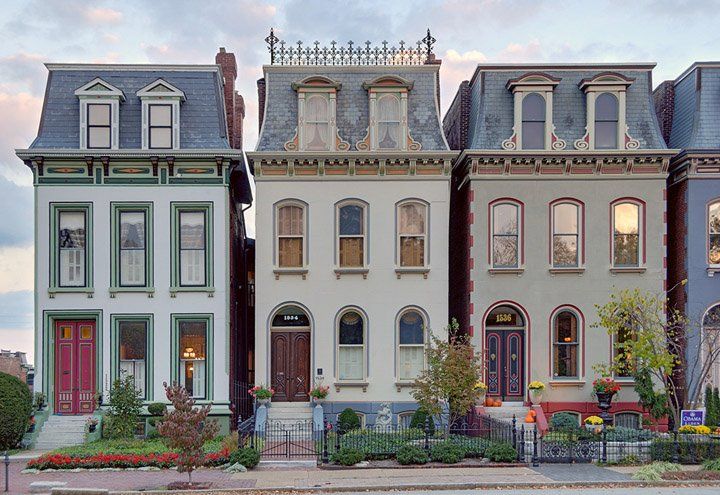
Neighborhoods that feel like neighborhoods
St. Louis is a city of distinct neighborhoods, most of them built from the same gorgeous red brick. You can live in a downtown loft, a brick bungalow on a century-old block, a tree-lined inner-ring suburb, or a bigger place with a yard farther out.
One thing worth knowing: the City of St. Louis and St. Louis County are separate governments, so you get real choice in what kind of place fits you, from urban and walkable to suburban and spread out.
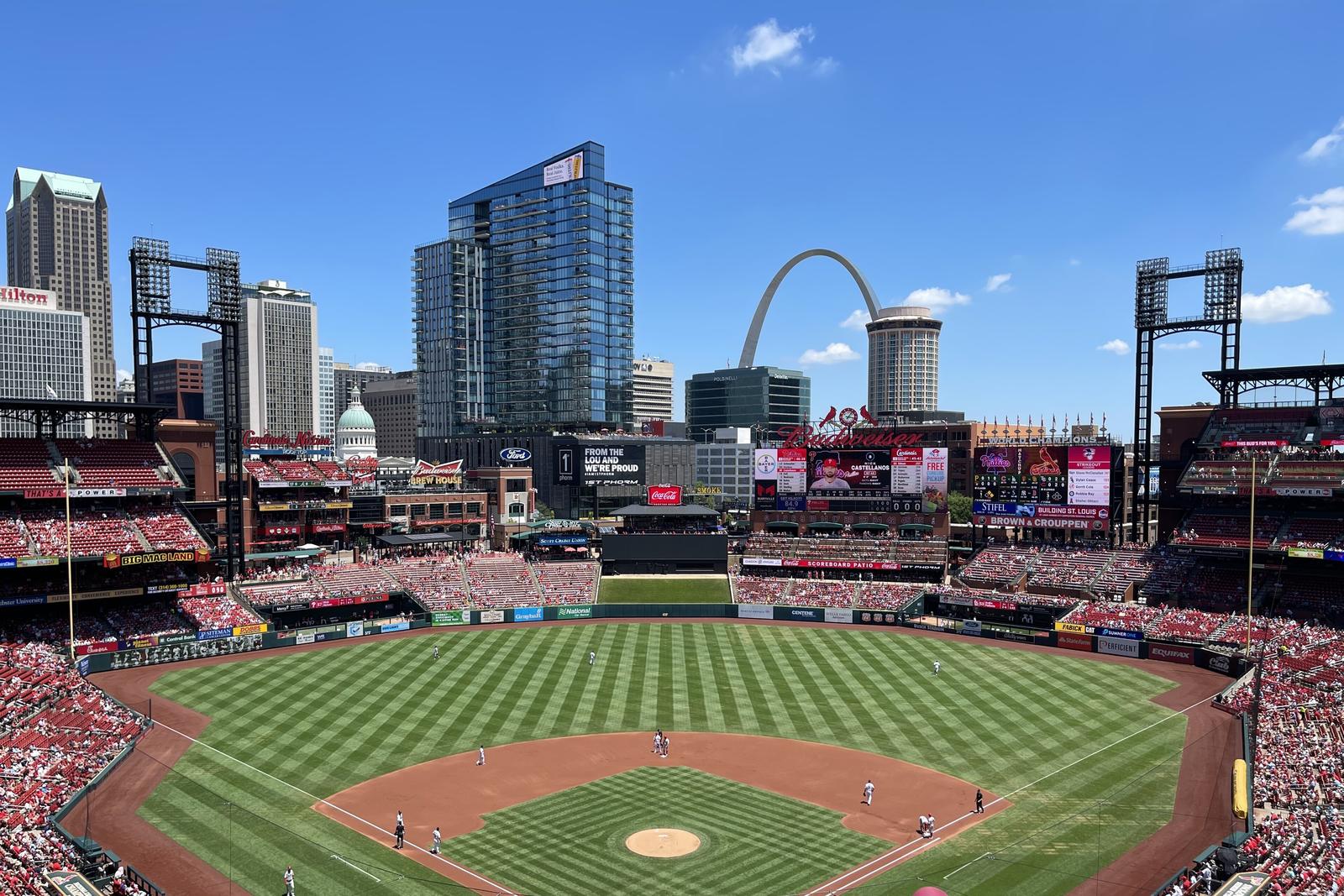
You won't run out of things to do
The Cardinals, the Blues and CITY SC all play downtown. Forest Park alone gives you a free zoo, art museum, history museum and science center. Add the Gateway Arch, City Museum, the Missouri Botanical Garden, and one of the best food scenes in the Midwest, and you start to see it.
There's a festival basically every weekend from spring through fall, live music all over town, and wine country about an hour west.
The middle of the country, in a good way
Easy flights anywhere, and a lot of cities within a day's drive: Chicago, Kansas City, Nashville, Memphis, Indianapolis, Louisville. I-64, I-70, I-44 and I-55 all run through the region.
Commutes you won't hate
Most commutes run well under half an hour. MetroLink light rail connects the airport, downtown, Forest Park, the Central West End and Clayton, with buses filling in beyond.
Four real seasons
Hot, humid summers, a gorgeous fall, mild springs, and winters with some cold snaps and the occasional snow. Central air and a good coat cover just about all of it.

Thinking about making the move?
I'm Jessica Swift, a REALTOR® with Keller Williams Saint Louis. If St. Louis sounds like your kind of place, I'll help you find the right corner of it. No pressure, just honest local help.